
Overview
Iran’s biblical tour is designed for those who want to travel through ancient Persia and see the biblical sites and where those events happened. See Esther, the Jewish queen of Iran who saved the Jews of the empire; Cyrus the Great, the saviour of Jews from Babylon; the Armenian districts and churches and more in Tabriz, Hamedan, Khuzestan, Shiraz, Yazd, Isfahan and Tehran.
- Day 1 – Arrival in Tabriz
- Day 2 – Tabriz
- Day 3 – Tabriz – Maku
- Day 4 – Tabriz – Takab
- Day 5 – Takab – Hamedan
- Day 6 – Hamedan – Khorram Abad
- Day 7 – Khorram Abad – Shush – Shushtar – Ahvaz
- Day 8 – Ahvaz – Bishapur – Shiraz
- Day 9 – Shiraz
- Day 10 – Shiraz – Yazd
- Day 11 – Yazd
- Day 12 - Isfahan
- Day 13 – Isfahan
- Day 14 – Isfahan
- Day 15 – Isfahan – Kashan – Tehran
- Day 16 – Tehran
You will be greeted by our representative and will be transferred to your hotel.
Spend the night.
Today we will start our sightseeing by visiting Saint Mary Church, the biggest and oldest Armenian church in Tabriz and a centre for Armenian religious ceremonies. Our next stop is Saint Serkis Church of Tabriz with its Armenian architecture.
Our next stop is Kabud Mosque, known as the Blue Mosque of the Islamic world, built in the 15th century. We will finish our day by visiting El Gulu (Shah Gulu) Park, a popular spot with the locals.
Spend the night in Tabriz.
Today we will head out towards Maku, where we can visit the Monastery of Saint Stepanos. This monastery is part of the Armenian Monastic Ensembles of Iran, which are inscribed on UNESCO’s World Heritage List. Drive back towards Tabriz and visit the Grand Bazaar of Tabriz, registered under UNESCO World Heritage. This lively vast maze-like bazaar was one of the last commercial centres on the Silk Road in today’s Iran and one of the oldest bazaars in the Middle East.
Afterwards, we will be visiting the Arg Alishah, the unfinished 14th-century monument which was used as a military fortress during the 19th-century Russo-Persian Wars.
Spend the night in Tabriz.
Today we will drive towards Takab. We will be visiting Takht-e Soleiman, the royal fire temple of the Sassanid dynasty, the last Persian dynasty before Islam. Next, we will visit Zendan-e Soleyman, believed by the locals to be the place where Solomon imprisoned the demons and was a dragon nest too.
Spend the night in an ecolodge in a village nearby.
Today we will be driving towards Hamedan, also known as Ecbatana, the summer capital of the Achaemenid dynasty. This city is where Esther and Mordekai lived, the second holiest place for Jews after Jerusalem. Next, we will be visiting the tomb of Avicenna. Avicenna was a Muslim Persian physician and philosopher who wrote over 450 treatises on a wide range of subjects.
Spend the night in Hamedan.
Today, we will go to Tuy Serkan to visit the Tomb of the Prophet Habakkuk. He was one of the most pragmatic prophets in the Bible. He is one of the Twelve Minor Prophets and author of the Book of Habakkuk. He lived at the end of the 7th century BC and may have been a contemporary of Daniel.
Moving south to Khorram Abad to visit Falak-o-al-Aflak Citadel.
Spend the night in Khorram Abad.
Leaving Khorram Abad behind, our first stop is Shush (Susa), the political capital of the Achaemenid dynasty. Here, we will visit the tomb of Daniel. He is one of the greatest prophets of the Old Testament. He was born in the late 7th century BC when the land of Israel was dominated by the foreign powers. He prophesized the fall of Babylon by Persia.
Next, we will visit the city of Susa, the ancient Persian city with its palace and museum.
Afterwards, we will drive towards the magnificent Ziggurat of Chogha Zanbil, dating back to 3200 years ago. This ziggurat is considered the best-preserved ziggurat in the world. In 1979, the Ziggurat of Chogha Zanbil was registered as a UNESCO World Heritage site.
Drive shortly to Shushtar to visit the oldest water reservoir system of Persia. We will visit the Historical Hydraulic System, a Unesco World Heritage Site.
Spend the night in Ahvaz.
In the morning, we will drive towards Shiraz. Our first sightseeing is the city of Bishapur. Built by Shapur, the Sassanid king, using the Roman prisoners when he captured Valerian, the Roman Emperor, in 260 A.D.
On the other side of the road, we will be visiting Tang-E Chogan. Some of the most notable rock reliefs of the Sassanian era are located here.
Spend the night in Shiraz.
Today we will visit Nasir-Al-Mulk Mosque, known as the Pink Mosque, which was built in 1888. Thanks to the stained glass, you can take some of your best photos on the tour.
Next is Narenjestan Garden with its sour orange scent, which was built in the 19th century.
From here we go towards Vakil Bazaar, where you can explore the shops and a fascinating caravanserai as well.
Shiraz is famous for its gardens, so we’ll visit Eram Garden, one of the nine Persian gardens registered under UNESCO World Heritage. This is a botanical garden where you can find tonnes of different flowers inside.
Shiraz is known to be the house of many poets. One of the prominent ones being Hafez, who lived in the 14th century. In here you can feel the taste of Persian literature.
We will finish our sightseeing by visiting the Ali Ebne Hamze shrine, which was built in the 19th century.
Spend the night in Shiraz.
Today we will be driving towards Yazd, the city of wind towers and the centre of Zoroastrians. On our way, we will visit Persepolis, a UNESCO World Heritage site, the former capital of Darius the Great, founded in 512 BC.
Persepolis was considered one of the greatest cities of its time, but unfortunately, in 330 BC, it was burnt by Alexander the Great, which put an end to the greatest empire the world had ever seen till that day.
Afterwards, we will visit Naghsh-e-Rostam, the necropolis where Darius the Great’s and his successors’ tombs are carved into the mountain so that everyone could see the eternal palace of the kings.
We’ll continue driving towards Yazd and on the way visit Pasargadae, a UNESCO World Heritage site, the tomb of Cyrus the Great and the former capital of the Achaemenid Empire.
Spend the night in Yazd.
Yazd is one of the oldest continuously inhabited towns in Iran and was an intersection of the trade routes from Central Asia and India. This city, which was described as the noble city of Yazd by Marco Polo, is the centre of the Zoroastrian community in Iran.
We start our sightseeing with the Tower of Silence, where we get to know more about pre-Islamic traditions of Iran. Up until the mid-1900s, the dead were transported to this tower, where they would decompose and be devoured by birds.
The next stop is the Zoroastrian Fire Temple, where you can see a flame that has been burning for the past 1,500 years.
In Amir Chakhmaq Square, which was inspired by the entrance of Yazd Masjed-e Jamé, you’ll see a congregation hall for Shia commemoration ceremonies. Next we will watch a Zurkhaneh performance. Zurkhaneh is a form of traditional martial arts in Iran, where men practise bodybuilding exercises in a ring. In 2010 Pahlevani and Zoorkhaneh rituals were inscribed on the representative list of the intangible cultural heritage of humanity.
The next stop is the Jame Mosque, built in 1324, where you can gaze upon the tallest minarets in the country.
Another one of the historic sites in Yazd is Dowlat Abad Garden, which was built in the 18th century with its hexagonal pavilion and stained-glass windows and the tallest wind tower in the world.
Spend the night in Yazd.
Today we continue our journey towards Meybod, where we will visit an old caravanserai built by Safavids. Afterwards we will visit the local ice house and get to know how people used to get ice in the desert.
Later on, we will visit the pigeon tower which was built by the Safavids.
On the way towards Isfahan, we will stop at Naein, where we can visit one of the oldest mosques in Iran.
En route, we visit Naein, one of the ancient cities with origins dating back to the 8th century. We visit the Jameh Mosque of Naein.
Your journey to the province of Isfahan, the 17th-century capital of the Safavid dynasty, continues. Isfahan was one of the largest cities in the world. Isfahan at its peak was one of the most beautiful cities in the world based on art and architecture and was called Nesf-e Jahan, or half of the world.
Spend the night in Isfahan.
Continue your exploration in Isfahan to another UNESCO World Heritage Site. The Masjed-e Jamé is another masterpiece of Iranian architecture which is known as the ‘encyclopaedia of Iranian mosques’. Over the past twelve centuries, each dynasty in Iran added their own touch to this mosque.
Later on, we will go to the Armenian quarter, where you will visit several churches, including the 17th-century Vank Cathedral with its lavishly decorated interior and unique blend of Islamic and European architectural elements.
At night we will visit the Sio Se Pol and Khaju bridges, where you can find lots of locals gathering and singing as well.
Spend the night in Isfahan.
Your exploration continues in Naghshe Jahan Square (Imam Square). This 17th-century site was considered the biggest square in the world. Here in the square, you’ll visit some of the masterpieces of Islamic architecture, starting with Shah Mosque, a four-minaret mosque, followed by Sheikh Lotfollah Mosque, also known as the royal mosque and its magnificent peacock.
In the Ali Qapu Palace, you’ll be awestruck at its beautiful music rooms and the balconies where Safavid kings would sit to enjoy the polo matches unfolding in the square below. Later on, you can enjoy the bazaar, where you can see local vendors who are experts in traditional arts, including miniature, enamel, pottery, jewellery and so on.
Next up is Chehel Sotun Palace, one of the nine Persian gardens registered under UNESCO World Heritage, which was built by Shah Abbas II for entertainment and court receptions. Inside you can see some of the ceremonies being depicted on the walls that have their own unique stories.
Spend the night in Isfahan.
Leaving Isfahan behind, we’ll travel north to Kashan, a town which is the epitome of everything that is Persian.
Our first stop is Fin Garden, a UNESCO World Heritage Site. These gardens, which were used by princes, were created in the desert and were called ‘Pardis’, from which the word ‘Paradise’ was later derived.
Next, you will visit Boroujerdi Traditional House. It was built around 130 years ago and is an example of Iranian desert houses.
Afterwards, we will continue towards Tehran.
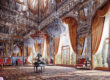
We will start our day by visiting the Saint Sarkis Cathedral, an Armenian Apostolic church, one of the three Armenian dioceses in Iran. Next, we will take you to the Golestan Palace, a UNESCO World Heritage site. Built during the Qajar Dynasty, which rose to power in the late 1700s.
Most of the things you see today go back to the 19th century, when local art and architecture elements were getting integrated with Western and Russian origins.
Afterwards, we will walk around Tehran Bazaar, the maze-like place which played a major role in the 1979 revolution of Iran.
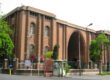
Next, you will visit the National Museum of Iran, where you can see artefacts which go back to thousands of years ago till the advent of Islam.
Drive towards Imam Khomeini International Airport (IKA) for your departure.
What’s Included?
- Arrival and departure transfer
- 15 nights of accommodation
- An Iranian tour guide throughout the tour
- Free SIM card
What’s Excluded?
- Visa authorization fee
- Visa costs
- International airfares
- Travel insurance
- Entrance fees
- Meals
- Tips to the guide and driver