
Alamut Castle and Related Fortifications
Alamut Castle and Related Fortifications is a serial UNESCO World Heritage property. It includes seven medieval fortifications. In 2026, UNESCO inscribed the site on the World Heritage List under Criterion (iii), recognizing its exceptional testimony to the Nizari Ismaili cultural tradition.
UNESCO Property Components
The Alamut Valley is home to these seven scattered fortifications:
| Component | Significance |
|---|---|
| Alamut Castle | Headquarters of the Nizari Ismaili state and principal political, religious, and intellectual center |
| Lambesar Castle | Largest fortress in the network, protecting the western approaches to the valley |
| Navizarshah Castle | Defensive outpost controlling mountain routes |
| Shams Kelayeh Fortification | Guarded communication routes and nearby settlements |
| Qosṭinlar Fortification | Part of the integrated observation and defense system |
| Shirkuh Fortification | Protected high mountain passes and reinforced regional security |
| Ilan Fortification | The eastern defensive position completes the fortified network |
What does Alamut mean?
It is believed the name Alamut is derived from a Daylamite expression meaning “eagle’s nest.”
According to local legends, a Daylamite ruler saw an eagle land on the rocky mountain. It was considered a good sign, and the castle was built there.
History
The castle was constructed around 865 CE by Wahsudan ibn Marzuban, one of the Daylamite rulers who ruled northern Iran. But the reason this fortress is famous is because of another historical figure.
Hasan-i Sabbah and the Nizari Ismailis
Capturing the Alamut (1090)
Through careful planning and local support, Hasan-I Sabbah, a well-known Nizari missionary, was able to capture the Almaut castle in 1090. Thus began the Nizari Ismaili State in Persia.
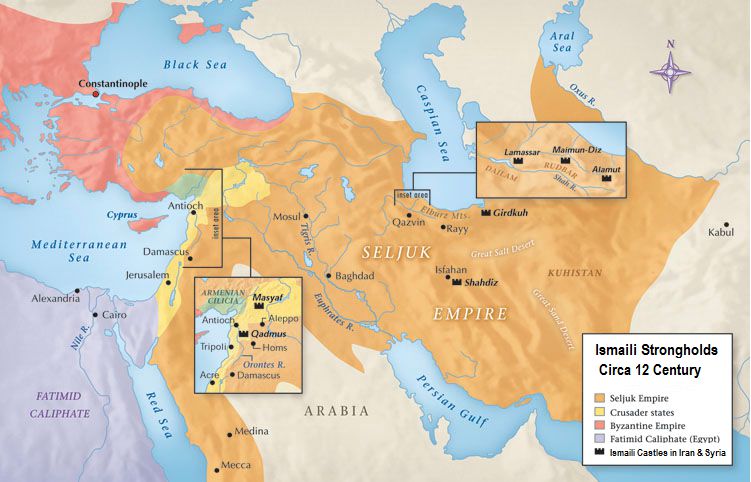
Hasan-I Sabbah created a decentralized network of mountain fortresses from Persia to Syria. Despite being surrounded by Seljuk territories, this state was able to survive throughout the Seljuk era.
The Nizari state controlled strategically placed fortresses. These fortresses were connected through local alliances.
From 1090 to 1256, Alamut functioned as the following:
- Political capital
- Religious headquarters
- Administrative center
- Military command
- Scientific and intellectual center
Strategic location
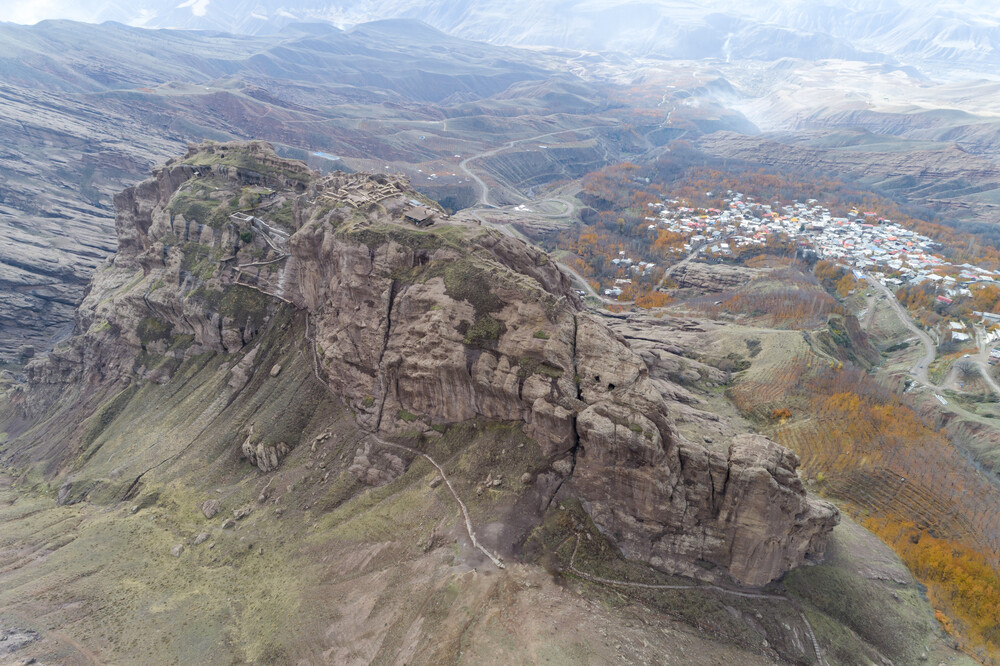
Geography was the greatest asset of Alamut and Nizaris. This geography was weaponized to the best effect by Nizaris. Alamut Castle is 220 meters above the valley floor, but the valley itself is 2163 meters (7,096 feet) above sea level.
There is only one way to reach the castle, and it’s through a narrow-sloped passageway, making it impossible for enemy armies to reach the castle.
Thanks to the surrounding castle and watch stations, they could monitor mountain passes, control access routes, provide military support, and signal each other.
The “Assassins”
Hasan-i Sabbah and the Nizari Ismailis have always been associated with the assassins. According to crusader chronicles, followers of Hasan-i Sabbah were mysterious killers obeying every command.
Modern historians are wary of these stories. The drug-induced rituals and paradise gardens lack reliable evidence. Though selective political assassinations were a means to survival against stronger rivals.

Architecture
Defenses
Geography was the best defensive asset of Nizaris. They used these features to their advantage:
- Sheer cliffs on three sides
- One narrow entrance
- High elevation
- Excellent visibility
Water Engineering
Having a castle that high in the mountains with little accessibility makes it quite difficult to provide water for the residents. By implementing different systems together, they were able to provide water for inhabitants during prolonged sieges.
The systems found by archeologists include:
- Rock-cut reservoirs
- Underground cisterns
- Channels carved into bedrock
- Terracotta water pipes
- Rainwater collection systems
Food Storage
The surrounding villages provided all the necessities like grain, livestock, and fruits to the castle.
- The castle contained:
- Storage chambers
- Protected food reserves
- Large granaries
- Agricultural terraces
The library
Historical sources describe the library of Alamut as a notable medieval Islamic library. Unfortunately, most of its collections were destroyed after the Mongol conquest in 1256.
Most of the surviving knowledge was through the copies and quotations in historical work.
The library reportedly had:
- Theology
- Philosophy
- Mathematics
- Astronomy
- Medicine
- Literature
Mongol conquest
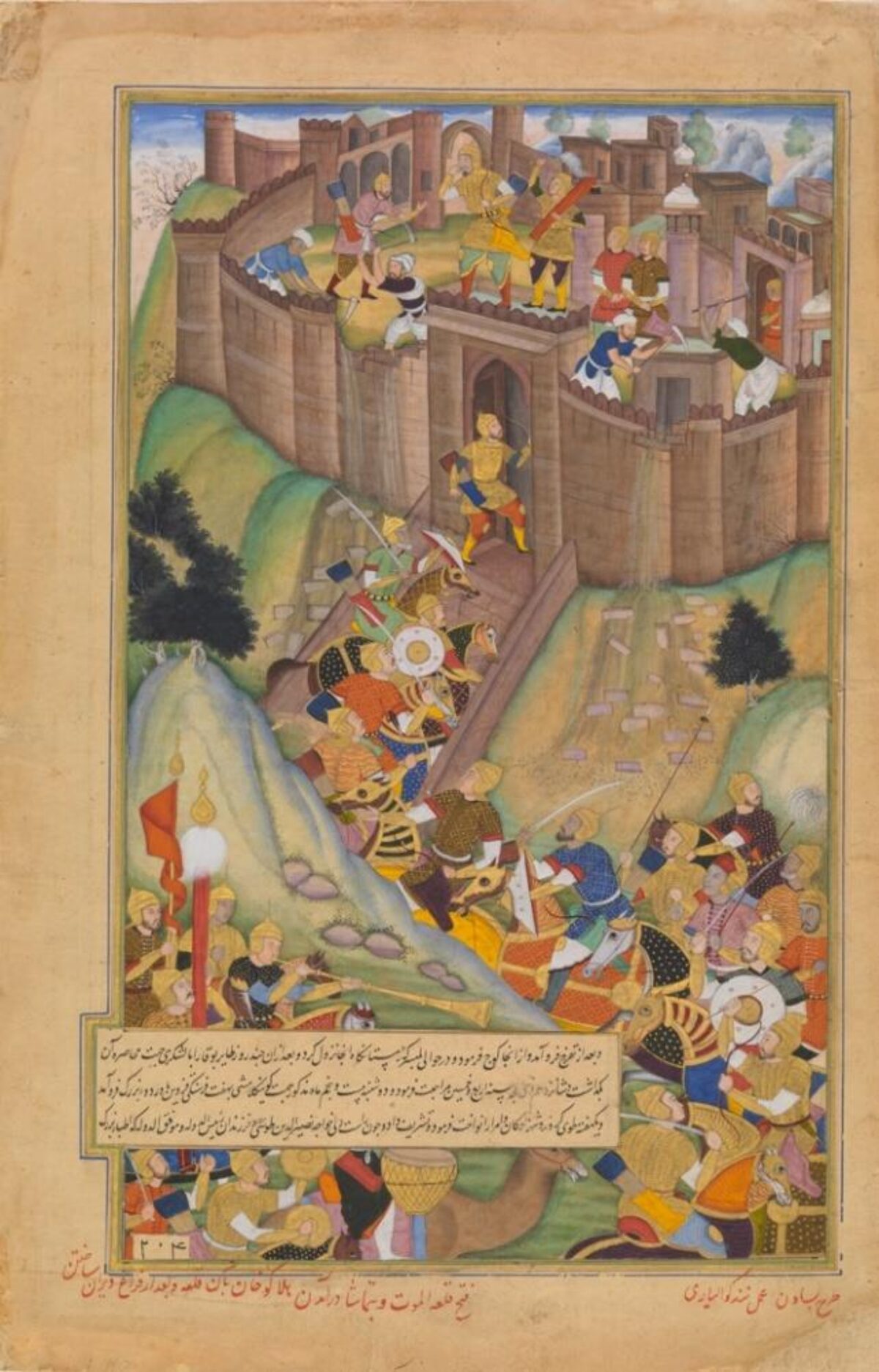
In 1256, Hulagu Khan, the Mongol ruler, launched a military campaign on Alamut and the Nizari Ismailis. Alamut was eventually surrounded, and the Nizari state centered there came to an end.
The Mongols destroyed sections of the fortress and burned down the library. The surviving sections were used during the next centuries, including a prison used during the Safavid dynasty.
Archaeology
Scholars like Laurence Lockhart, Vladimir Ivanow, Peter Willey, and others had surveyed and documented the ruins, but the first systemic excavation was done in 2001 by Iranian archaeologist Dr. Hamideh Choubak.
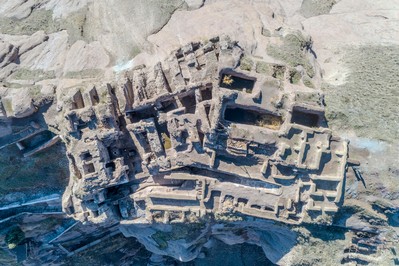
During these excavations the archeologists revealed the following:
- Residential quarters
- Defensive walls
- Towers
- Water systems
- Storage rooms
- Ceramic artifacts
- Coins
- Metal objects
Visiting Alamut
The easiest way is to drive there. First, you need to reach Qazvin province. Then you need to hire a taxi or private driver to reach Gazorkhan village.
You need to climb around 400 moderately steep stone steps to reach the summit.
FAQ
Is Alamut Castle wheelchair friendly?
Unfortunately, no. It has 400 moderately steep stone steps.
Can I visit Alamut without a local expert?
It is possible. But make sure you hire a private driver or taxi.
When is the best time to visit Alamut Castle?
May, June, and September are the best months to visit Alamut.
How many hours do I need to visit Alamut?
To fully explore the ruins and enjoy the view, you need 2 hours.
Is there any other sightseeing close to Alamut?
You can visit nearby Lambesar Castle, Ovan Lake, and traditional mountain villages.
References
- UNESCO World Heritage Centre – Alamut Castle and Related Fortifications
- Institute of Ismaili Studies – Alamut (Farhad Daftary)
- Peter Willey – Eagle’s Nest: Ismaili Castles in Iran and Syria
- Cambridge University Press – The Isma’ilis: Their History and Doctrines
- Bloomsbury/I.B. Tauris – The Assassin Legends: Myths of the Ismailis