
Introduction
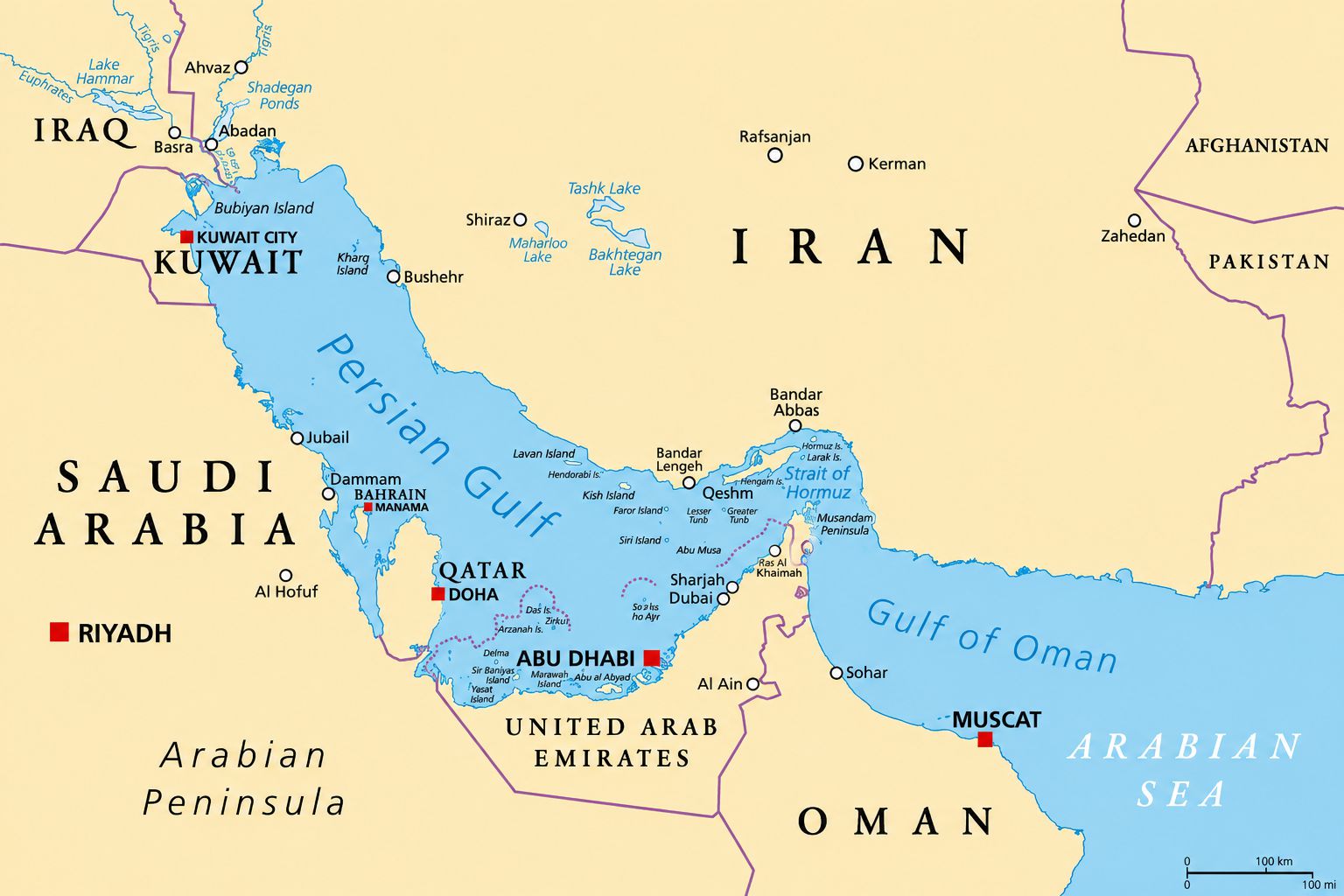
The Strait of Hormuz is a narrow waterway connecting the Persian Gulf to the Gulf of Oman and, through it, to the rest of the world. Iran controls the northern side while Oman lies on its southern side. On the northern side is the Hormozgan Province of Iran, and on the south is Oman’s Musandam Governorate. Qeshm, Hormuz, Larak, and Hengam are the Iranian islands located on or around it.
Although it is relatively small, it plays a major geographical, historical, economic, and strategic role.
A Brief History
The Strait of Hormuz has played a major role as a maritime route for thousands of years. Through here, ancient civilizations around the Persian Gulf were trading and connecting Mesopotamia, Persia, Arabia, India, and East Africa.
In the early 16th century, the Portuguese captured Hormuz Island to control trade through the Persian Gulf. Later on, in 1622, Shah Abbas I of the Safavid Dynasty of Iran ended the Portuguese presence with help from the English East India Company.
The Islands Around the Strait of Hormuz
Qeshm Island
Qeshm Island is the largest island in the Persian Gulf. This Iranian island is larger than Bahrain, an island country on the Persian Gulf. Its attractions include dramatic coastal landscapes, mangrove forests, valleys, caves, and traditional villages.
Hormuz Island
Hormuz is known for its geology and colorful landscapes. The island’s red soil, rocky coastline, salt formations, and colorful mountains make it attractive to photographers and nature lovers.
Hengam Island
To get to Hengam Island, you should ride a boat from Qeshm Island. Hengam Island is known for its bottlenose dolphins, pristine beaches, colorful rocks, and traditional villages.
Larak Island
Larak Island is close to the Strait of Hormuz, giving it a considerable geographical importance.
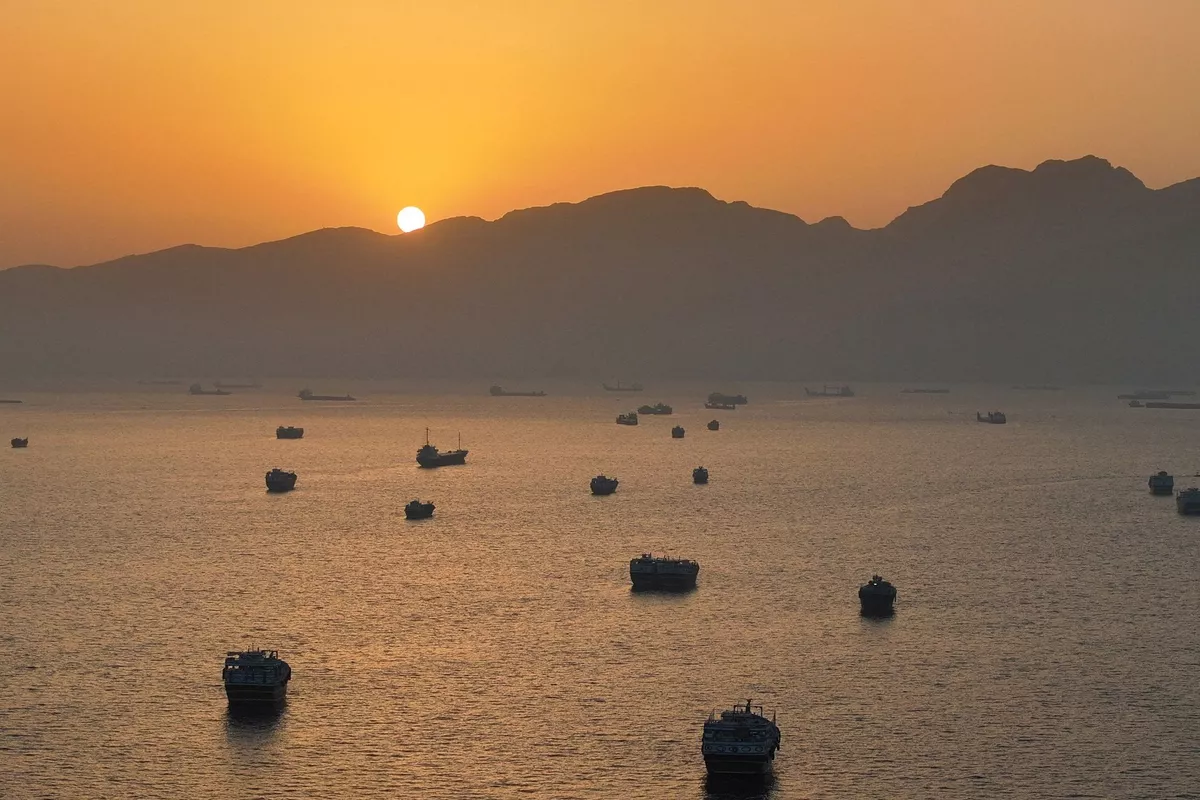
Why Is the Strait of Hormuz So Important?
It is the only way into the Persian Gulf. Since almost 20% of world energy goes through it, it is one of the most important chokepoints in the world.
Iran, Saudi Arabia, Iraq, Kuwait, Qatar, and the United Arab Emirates are the major oil and gas producing countries in the Persian Gulf. All these countries depend on this strait to reach international markets.
Thus, any event affecting the shipping through this waterway has a huge effect far beyond the Middle East and on an international level.
Iran and the Strait of Hormuz
Iran controls the northern side of the Strait of Hormuz and has several islands strategically located in and around it.
For travelers, the Iranian side is particularly fascinating because the area combines:
- Persian Gulf landscapes
- Historic ports
- Colorful islands
- Traditional coastal culture
- Unusual geology
- Maritime history
Bandar Abbas and Qeshm Island act as a base for travelers visiting southern Iran.
Oman and the Strait of Hormuz
Oman lies on the southern side of it through the Musandam Peninsula.
Musandam is separated from Oman by the territory belonging to the UAE. The peninsula is famous for its dramatic mountains, fjord-like coastal inlets, and clear waters.
Visiting the Strait of Hormuz
The best way to experience this waterway for travelers visiting Iran is through the islands and coastal areas of southern Iran.
Best places to visit
Qeshm Island – Best for nature, geology, villages, mangrove forests, caves, and coastal scenery.
Hormuz Island – Best for colorful landscapes, beaches, geology, and photography.
Hengam Island – bottlenose dolphins, pristine beaches, colorful rocks, and traditional villages.
Bandar Abbas – The largest urban center in the area and an important starting point for exploring the southern coast.
Larak Island – A quieter destination for travelers interested in less-developed island landscapes.
Best time to visit
Southern Iran is known for its hot climate, especially in the summer. It is recommended to visit southern Iran from autumn through late winter. The climate is much cooler during these seasons.
It will be quite busy, especially during early spring in the Nowruz, the Persian New Year.
FAQ
Where is the Strait of Hormuz?
The Strait of Hormuz connects the Persian Gulf to the Gulf of Oman. The Strait lies in southern Iran and northern Oman.
Which countries control the Strait of Hormuz?
Iran controls the northern side while Oman borders the southern side of the Strait of Hormuz.
Why is it called the Strait of Hormuz?
The Hormuz Island of Iran is located at the entrance of the strait and gave its name to the Strait of Hormuz.
Why is the Strait of Hormuz important?
Although the Strait of Hormuz is best known as a major oil and gas route, it also carries container ships, food and agricultural products, vehicles, machinery, petrochemicals, metals, fertilizers, and other commercial cargo between the Persian Gulf and the Arabian Sea.
Can tourists visit the Strait of Hormuz?
Yes! The tourists visiting southern Iran can experience the Strait of Hormuz through Bandar Abbas, Qeshm Island, Hormuz Island, Hengam Island, and Larak Island.
Why is Hormuz Island famous?
Hormuz Island has a unique and distinct characteristic. It has colorful geological formations, red soil, dramatic coastline, and unusual landscapes.
Is the Strait of Hormuz in Iran?
Iran controls the northern side, and Oman lies on the southern side of it.