
Introduction
A bazaar is a traditional commercial center in Iran, the Middle East, South Asia, and northern Africa. It has never been just a market but an economic and social center of urban life.
Bazaars are typically roofed and have special trade districts with public bathhouses, tea houses, mosques, workshops, and caravanserais for long-distance merchants.
A bazaar is a place where people could buy and sell their goods, settle disputes, find business partners, and participate in politics. It is not viewed as just a market but as a foundational institution of Persian and Islamic civilization.
The Grand Bazaar of Tehran
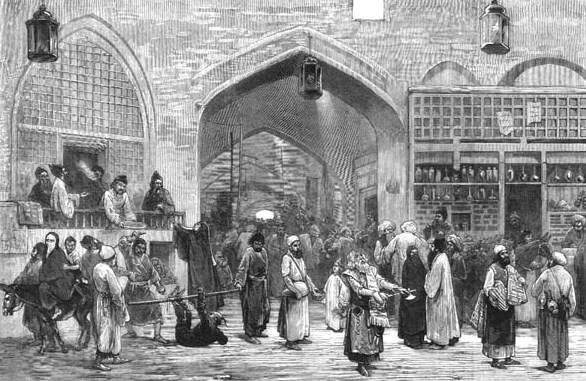
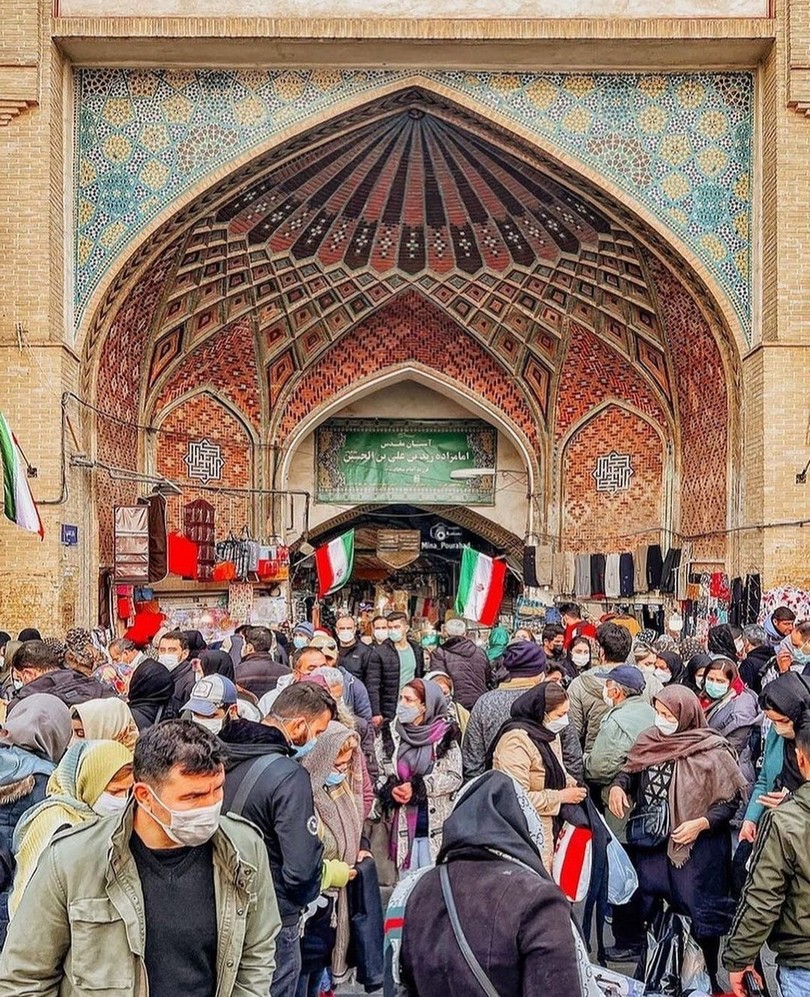
The Grand Bazaar of Tehran is the beating heart of old Tehran. It is located south of Golestan Palace and grew alongside Tehran from a town to a capital of Iran. Most of the current form of the bazaar dates to the Safavid, Zand, and mostly Qajar periods.
Size and layout
This enormous bazaar is a network of covered passageways extending for over 10 kilometers (6 miles). It forms a maze of interconnected corridors, caravanserais, mosques, courtyards, shops, warehouses, and workshops. The bazaar is a collection of districts, each specializing in specific trades.
These districts are dedicated to:
- Carpets
- Copperware
- Spices
- Religious items
- Leather products
- Gold and jewelry
- Textiles
- Books
The different lanes of the bazaar are named after the professions practiced there, which has created a very well-organized commercial ecosystem.
Economic importance
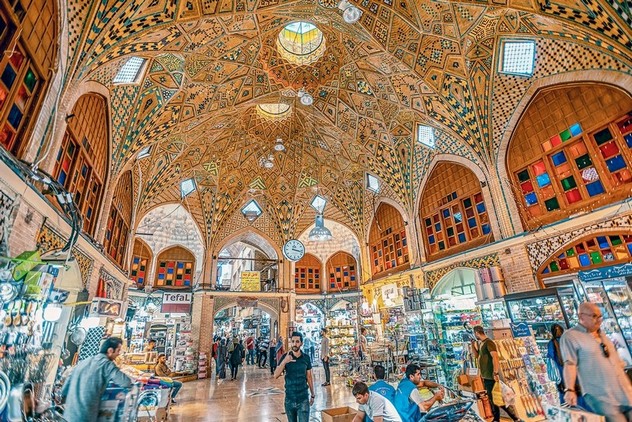
Before the age of shopping malls and online shopping, it was the bazaars that acted as the center of commerce. Goods arrived from all around Iran, India, Central Asia, the Caucasus, the Ottoman Empire, and Europe into the bazaars. Merchants negotiated everything in the bazaars from wholesale deals, finding and maintaining business partnerships and arranging transport.
To this day, the bazaars still remain a center for wholesale deals. Prices established in the bazaar are influencing the market throughout the country. Most manufacturers either have a shop or representative in the bazaars as well.
Architecture
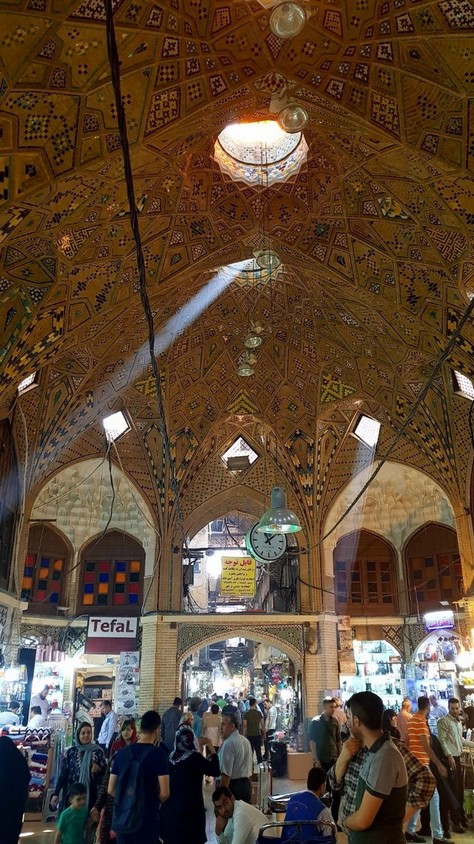
The older parts of the bazaar are covered and have an opening on the ceiling. These openings both provide light and help with air circulation. In the hot summers of Tehran, the bazaar is cool and, in the winter, it is warm.
The bazaar complex has different parts. These parts include:
- Timche (a decorated trading hall)
- Sara (commercial courtyards)
- Caravanserai (lodging and storage for merchants)
- Religious schools
- Mosques
- Bathhouses
By implementing these parts, the bazaar was more of a small city where you had access to anything you needed.
Political influence
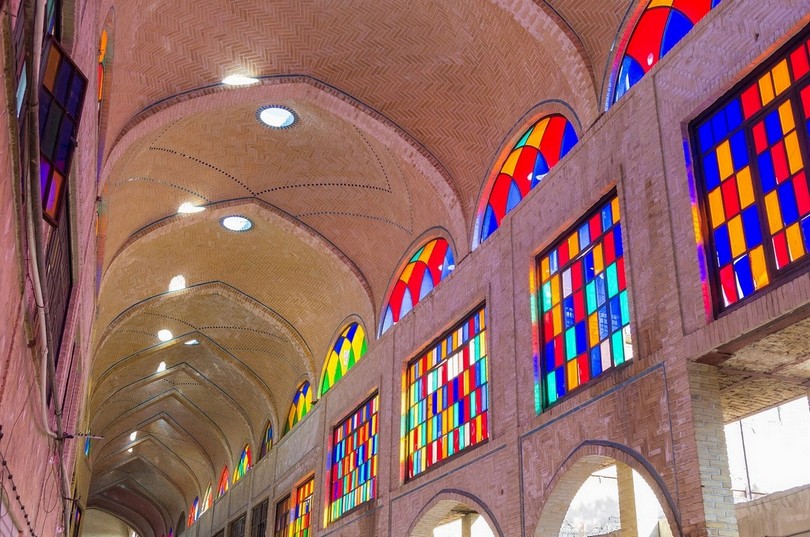
The merchants in the bazaar, or bazaaris, have always had a close relationship with the clergy. They provide financial support for the religious institutions and have played a major role in the Iranian political movements.
The constitution revolution (1905-1911), opposition to some of the policies undertaken by the Pahlavi dynasty, and the revolution of 1979 are the most important movements the bazaar has taken part in.
The alliance between the bazaar and the clergy is what shaped modern Iran.
How to get to the Grand Bazaar of Tehran?
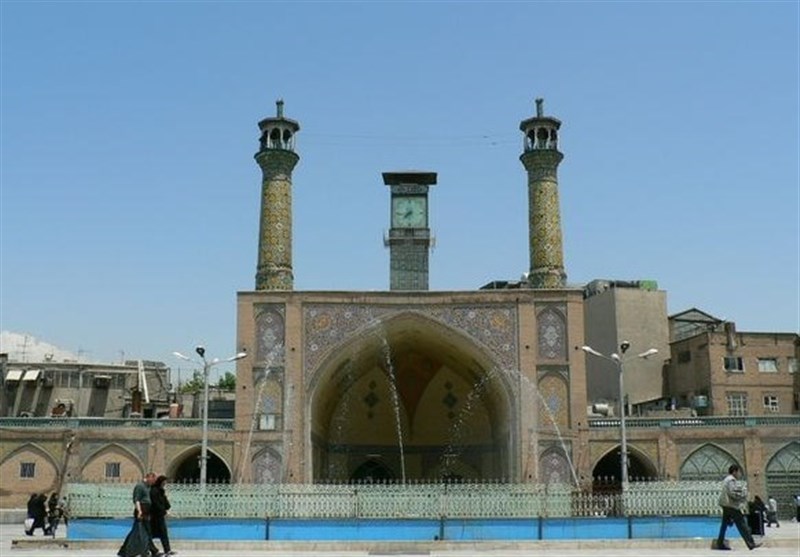
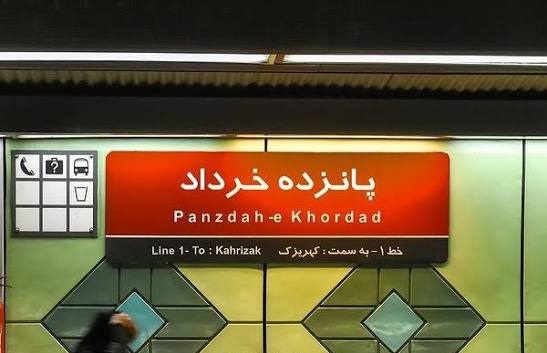
The easiest way is to use the subway system. You need to get on line one (the red line) of the subway and go to Panzdah-e Khordad Station. After exiting the subway station, you need to reach Sabz-e Meidan. From there you can easily walk through the grand bazaar of Tehran.
Conclusion
The bazaar is a sensory experience. You can smell the tea, saffron, and spices. Watch the merchants bargaining with the customers. See the workers transport the goods in the passageways that are centuries old.
Unlike modern shopping centers, most businesses are family businesses and have been there for generations. It is a nice change of pace to visit the bazaar, which still maintains its authenticity in the modern world.