

Introduction
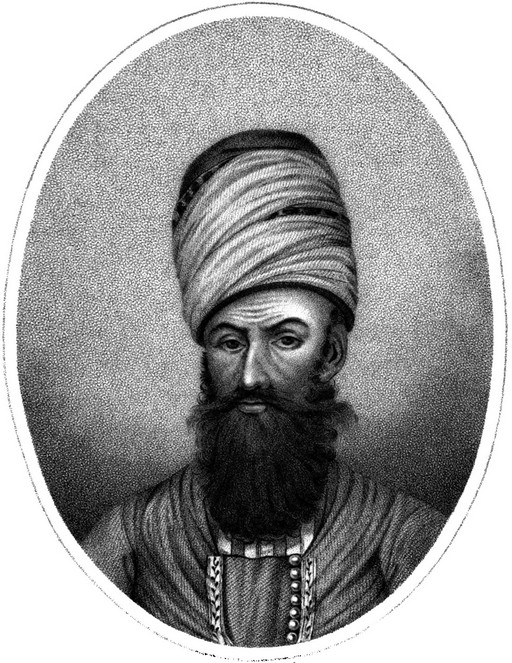
The Zand dynasty (1751–1794), a relatively short but influential Iranian dynasty founded by Karim Khan Zand. After decades of warfare during the Afsharid dynasty (1736–1796), the Zand dynasty brought stability to Iran. The Zand dynasty was a period of peace, cultural revival, and prosperity centered in Shiraz.
History
The Zands belonged to the Zand tribe, a branch of Lak people living in the Zagros Mountains in western Iran. After the assassination of Nader Shah, war broke out in the country. Iran was fragmented into rival kingdoms, and Karim Khan was able to come on top and unified most of the country.
Instead of calling himself Shah (king), he preferred to be called Vakil al-Ra’aya (“Representative of the People”). This was a defining moment as he considered himself a protector of people, not their ruler.
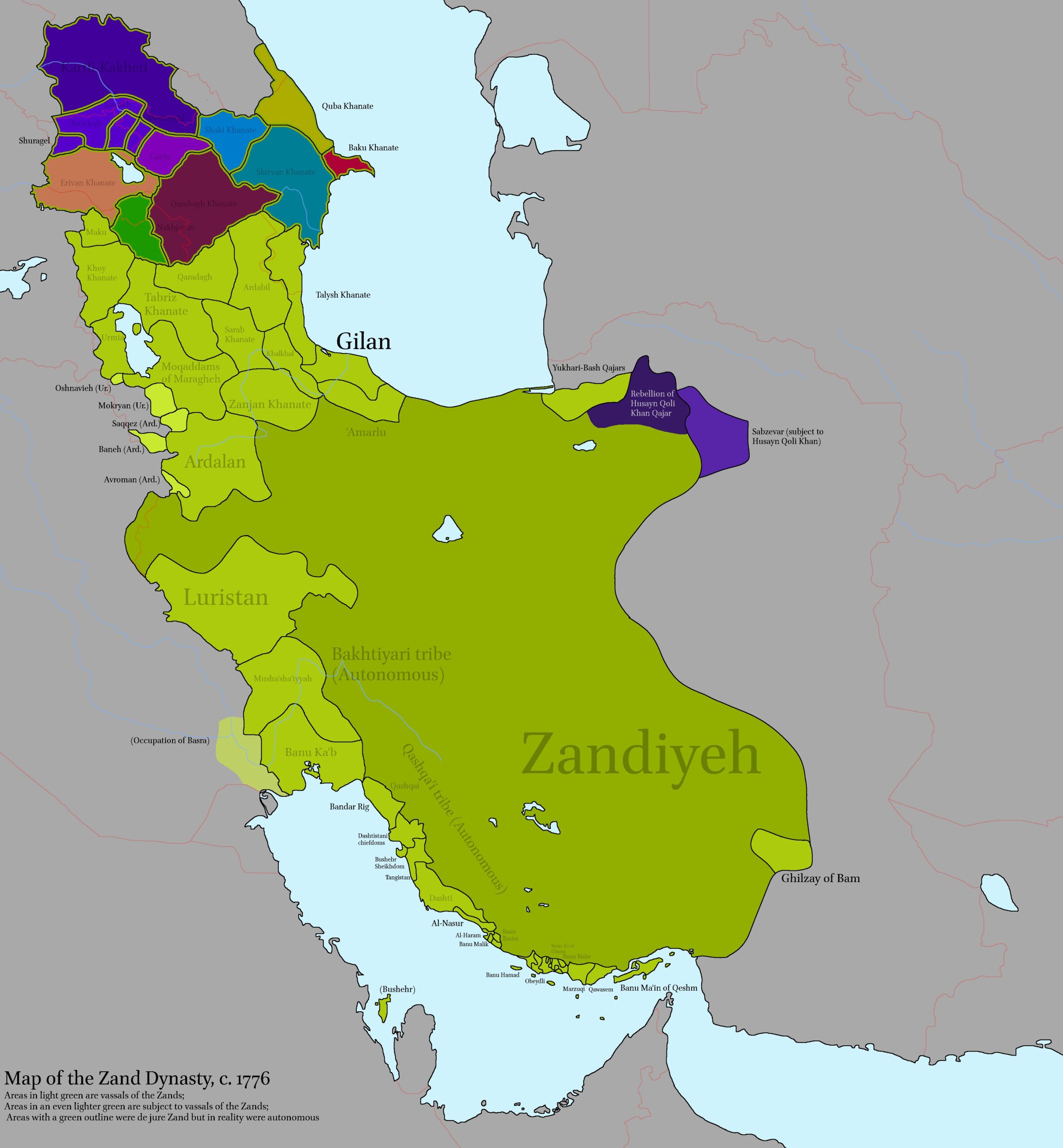
Karim Khan Zand (r. 1751–1779)
Karim Khan is regarded as one of Iran’s most respected rulers. His reign was one of justice and relative prosperity.
His achievements during this short period of time included:
- Restoring internal peace after decades of civil war.
- Making Shiraz the capital.
- Encouraging trade and agriculture.
- Lowering taxes in many regions.
- Improving roads and caravan routes.
- Promoting religious tolerance and public welfare.
- Expanding commerce with European trading companies.
Shiraz: Capital of the Zand Dynasty
After decades of war and chaos, the time of peace and prosperity started. After Karim Khan chose Shiraz as his capital, he transformed it into one of the most beautiful cities in Iran. An integrated complex of buildings was constructed that defines the city to this day.
Major Zand monuments include:
- Karim Khan Citadel – the royal residence and seat of government.
- Vakil Bazaar – The city’s principal commercial center.
- Vakil Mosque – One of the finest mosques of the 18th century.
- Vakil Bath – A luxurious public bathhouse.
- Numerous gardens, caravanserais, bridges, and waterworks.
Thanks to these projects, Shiraz became a leading cultural and commercial center in the Middle East.
Economy
Economic relations expanded during the Zand dynasty. Trade through the Persian Gulf was booming, and the British East India Company and the Dutch East India Company were trading with Zand-iran.
The economy during this time depended on:
- Agriculture.
- Caravan trade.
- Silk and textile production.
- Persian carpets.
- Gulf maritime commerce.
Government
Many administrative practices from previous Persian dynasties were taken up by Karim Khan Zand. He relied highly on consolation and governed with moderation.
His government included:
- Provincial governors.
- Tax officials.
- Military commanders.
- Religious judges.
- Local tribal leaders.
Culture and Architecture
Persian arts were revived during the Zand era. It acted as a bridge between the Safavid and Qajar styles.
Architectural characteristics include:
- Elegant brick construction.
- Marble columns.
- Intricate floral tilework.
- Spacious courtyards.
- Harmonious proportions.
Foreign Relations
Karim Khan favored trade and cooperation over expansionism. He maintained diplomatic and commercial contacts with the following nations:
- Ottoman Empire
- Russian Empire
- Kingdom of Great Britain
- Kingdom of France
- States around the Persian Gulf and the Indian Ocean.
Decline
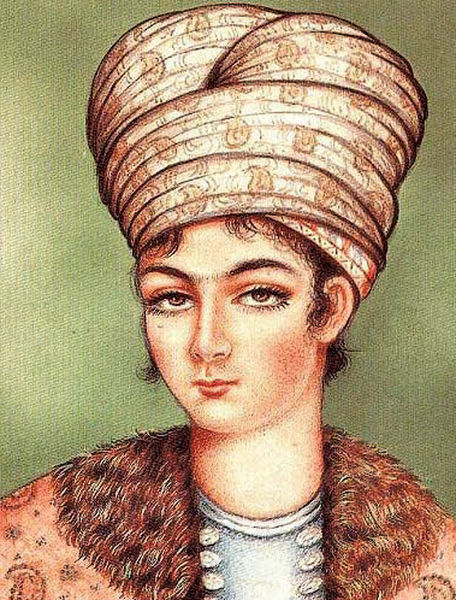
After the death of Karim Khan in 1779, rival members of the Zand family fought over succession. This civil war weakened the Zands and led to Agha Mohammad Khan Qajar rising in the north after fleeing Shiraz.
After defeating Lotf Ali Khan, the last major Zand ruler, in 1794 and occupying Kerman, the Zand dynasty came to an end. After Agha Mohammad Khan was able to defeat Lotf Ali Khan, he founded the Qajar dynasty.
References
- Encyclopaedia Iranica – “ZAND DYNASTY” by John R. Perry
- Encyclopaedia Iranica – “KARIM KHAN ZAND” by John R. Perry
- Michael Axworthy, A History of Iran: Empire of the Mind.
- The Cambridge History of Iran, Volume 7: From Nadir Shah to the Islamic Republic
- John R. Perry, Karim Khan Zand: A History of Iran, 1747–1779 (University of Chicago Press, 1979).