
Introduction
Throughout history, only a small number of rulers have fundamentally changed the political landscape of their time. Darius the Great, better known as Darius I, is one of those rulers.
Cyrus the Great founded the Achaemenid (Persian) Empire, but it was Darius the Great who consolidated, reorganized and expanded the empire established under Cyrus and Cambyses.
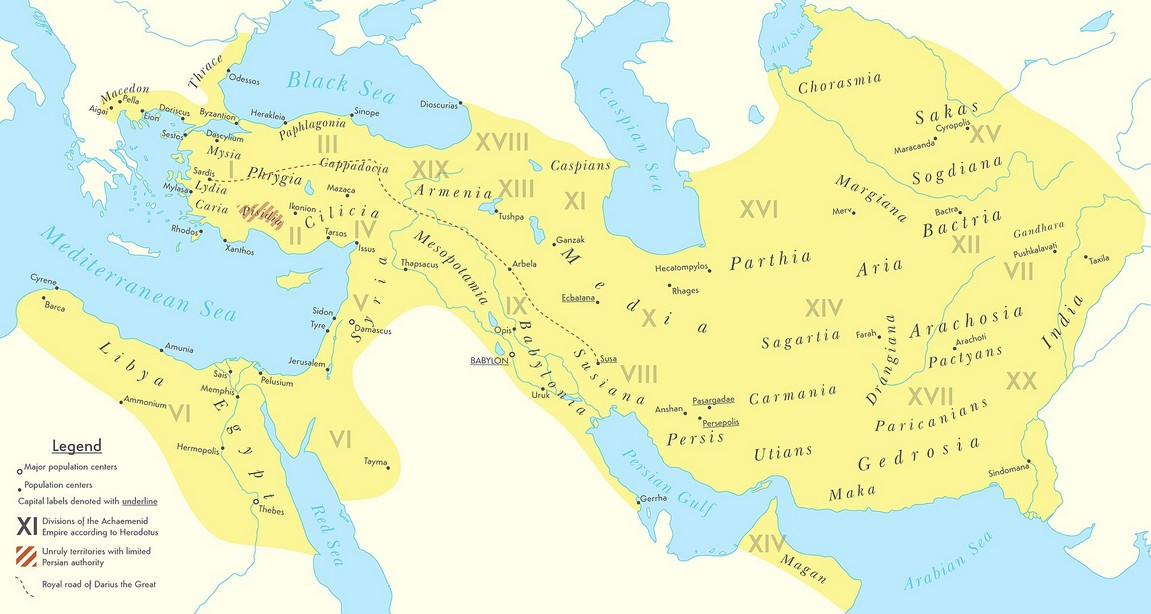
By the end of his reign, the empire stretched across approximately 5–5.5 million km², from the Indus Valley to Thrace in southeastern Europe and from Central Asia to Egypt, making it the largest empire the world had yet seen.
Although his coming to power is ambiguous, after containing the early crises, he gained control over the situation. The administrative and social structures of the Achaemenids, reorganized and institutionalized by Darius the Great, were so strong that they lasted till the fall of the dynasty. Many elements of this administrative tradition influenced later Iranian states.
Early Life
Darius the Great was born around 550 BC. He was from the cadet (secondary) branch of the Achaemenid royal family. Darius served as a spear-bearer in the court of Cambyses II, the son of Cyrus the Great.
Rise to Power
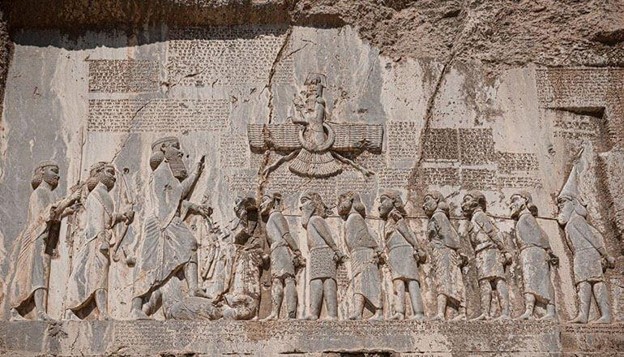
After conquering Egypt, Cambyses II died on his way back. According to Darius’ own account in the Behistun (Bisotun) Inscription, Gaumata claimed to be Bardiya (Smerdis), the brother of Cambyses. He was an imposter who had seized the throne and was killed by Darius and six other Persian nobles. Darius claimed that nine pretenders challenged his authority and that his forces fought nineteen battles during the rebellions that followed his accession.
The suppression of Gaumata and the subsequent rebellions became central to Darius’s justification of his accession.
modern historians continue to debate whether Gaumata was an impostor or whether Darius overthrew the legitimate Bardiya, the rightful heir to the Achaemenid Empire.
Darius I spent the early years of his reign to suppress the rebellions.
The Behistun (Bisotun) Inscription
The Behistun (Bisotun) Inscription is carved on a limestone cliff in Kermanshah Province, Iran. It is sometimes called the “Rosetta Stone of Old Persian” because its multilingual text helped scholars decipher Old Persian cuneiform.
The inscription is written in Old Persian, Elamite, and Babylonian and talks about Darius’s genealogy, his accession, suppression of rebellions, and his divine legitimation through Ahura Mazda.
Administrative Genius
What made Darius stand out was his administrative ability. He had an empire that stretched from Indus valley in the east to the Danube River in the west. The administrative system restructured and institutionalized by Darius the Great helped facilitate the governance of this vast empire.
Satrapy System
The empire was divided into satrapies (provinces). The administrators in each of these satrapies could partake in peace negotiations on behalf of the king or act on border conflicts.
Administrative power was not concentrated in the hands of a single official; different officials shared responsibility for governing the empire:
- a satrap (governor)
- military commander
- royal secretary
Besides these administrators, there were inspectors known as the “King’s Eyes and Ears” who only responded to the king.
By dividing the power this way, the likelihood of corruption could decrease.
Currency
Darius introduced the famous Achaemenid daric and siglos, establishing a distinctive royal coinage. The importance of these coins was especially strong in western regions and Asia Minor, greatly facilitating long-distance trade.
Taxation
According to Herodotus, under Cyrus the Great and Cambyses II, subjects were obliged to deliver only gifts. It was during the reign of Darius that tax assessment was standardized and systematized.
Herodotus preserves detailed tribute lists, many of which are broadly supported by administrative records from Persepolis.
Introducing the Old Persian Cuneiform Script
Although Darius had managed to reform the empire to a great extent, there were more things to do. The Persian Empire didn’t have its own writing system until the 6th century BC.
Infrastructure
Expanding the empire would only be possible by expanding the roads. The Achaemenids made use of earlier routes while expanding and improving the road network. This way, the movement of the army, caravans, and travelers would be facilitated.
The Royal Road
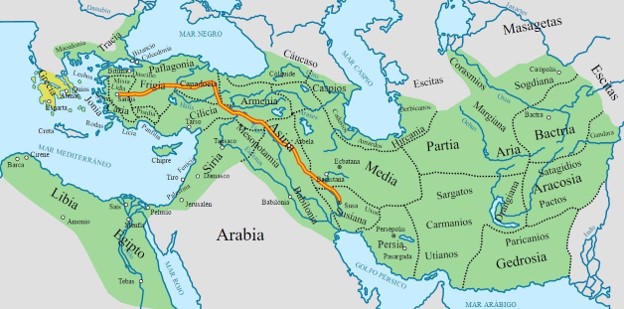
After suppressing the revolts, Darius the Great ordered a number of roads to be built, including the Royal Road. This road was approximately 2600 km (1615 miles) and connected Susa to Sardis.
The Royal Road was used by the king, courtiers, military forces, and big caravans. This road was about 5 meters in width. Inspectors would check this road regularly and fix any problems quickly.
Barracks on the road would dispatch soldiers regularly to keep the road secure.
According to Herodotus, throughout the Royal Road, there were 111 relay stations. Later on, these relay stations transformed into caravanserais.
Mounted couriers would use this road and the relay stations to carry the royal messages from Susa to Sardis in 12 days. It was much faster than ordinary travelers.
Herodotus praised this postal system by saying, “neither snow nor rain nor heat nor gloom of night stays these couriers from the swift completion of their appointed rounds”
This motto became the unofficial motto of the U.S. Postal Service.
Travel Permits
People using the roads on official trips, such as Satrapy representatives, Achaemenid officials, foreign guests, couriers, and tax collectors, had to have a travel permit with them.
The permit included the names, the number of travelers, and what they were carrying with them.
The Persian Sea route
The Persians knew that the sea was an obstacle for them. They had to overcome this obstacle to be able to expand the empire and control it better. Cambyses II used the Phoenician specialists to sail towards Egypt. This was the first step for the Persians to make their own navy. This was the first time the Persians sailed through the Mediterranean Sea.
Darius completed a canal linking the Nile to the Red Sea, creating a navigable waterway between Egypt and the Red Sea centuries before the modern Suez Canal. Although the Persians were not able to fully control the upper seas (Mediterranean Sea), they had full control over the lower seas (the Persian Gulf).
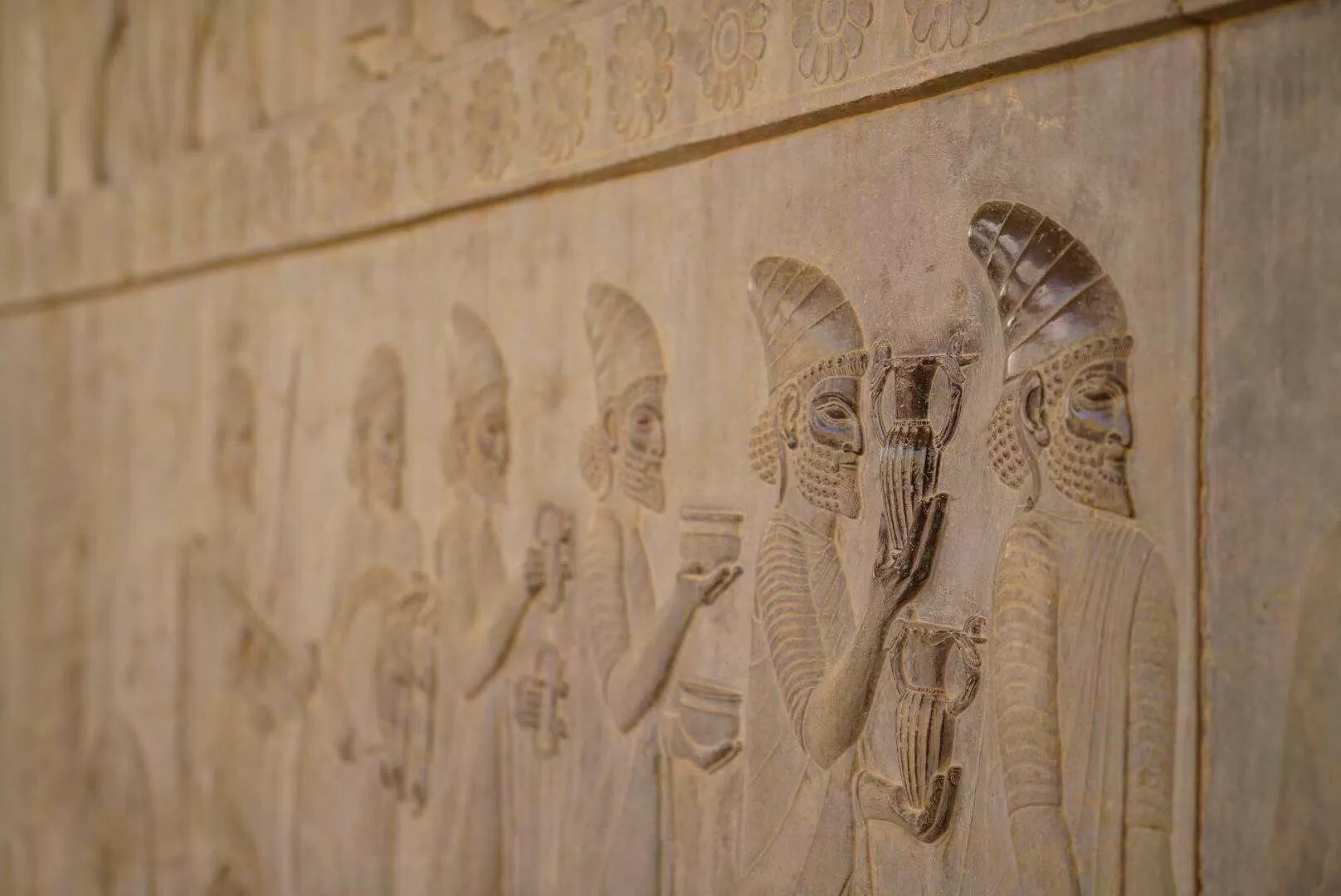
Persepolis
Persepolis is located 57 km northeast of Shiraz. Persepolis’s function is debated to this day. Many scholars such as Herzfeld, Krefter, Erdmann, Ghirshman, and Porada believe it was a ceremonial capital meant to celebrate Nowruz, the Persian new year. This claim is denied by some other scholars notably by notably Nylander, Calmeyer, Mousavi as there is no evidence for celebrating Nowruz in the Achaemenid period. Others have seen Persepolis as illustration of royal power or a political, economic, and administrative center of the empire, or an observatory for correcting time-reckoning systems.
The construction of Persepolis started approximately in 518 BC by Darius the Great.
The reliefs depicting delegations from across the empire presenting offerings emphasize the diversity and hierarchical unity of the Achaemenid realm.
The construction continued under Xerxes and Artaxerxes I and maintained until 330 BC.
Foreign Policy and Military Campaigns
Egypt
In 517 BC, Darius traveled to Egypt and pacified the rebellious Egyptians. Then, he ordered the codification of Egyptian laws and supported the construction of Egyptian temples. Showing respect to their religion and past glory helped strengthen Persian administration in Egypt.
India
Next, the Scylax’s expedition down the Indus was carried out. After the mission was finished, Darius incorporated territory around the Indus/Sindh region.
The Sakās (Scythians)
One of the most important events during Darius’s reign was his European campaign. The region from the Aral Sea to the Ukraine was the territory of Iranian tribes known as Sakā (Scythians).
The Sakās were hostile towards the empire. Some of them had fought against Cyrus the Great and had slain him, another group had invaded Media, and the next group had revolted against Darius.
To secure the trade between Central Asia and the shores of the Black Sea, Darius had to defeat them.
The Ionian revolt
Around 499 BCE, the Ionian Revolt began, with support from Athens and Eretria. The city of Sardis was burned down, and it took 6 years for Darius to eventually subdued the Ionian cities and islands. This conflict led to the Greco-Persian Wars.
Marathon
Darius sent an expedition led by Datis, who captured Eretria and landed in Marathon, Attica. He was faced with a heavily armed Athenian infantry of 9,000 men, supported by 600 Plataeans and lightly armed “attendants” under Miltiades.
The Athenians defeated the Persian army in the battle in 490 BC.
The next expedition was supposed to be led by Darius, but there was a revolt in Egypt, and later on Darius died before he could launch the planned expedition.
Death
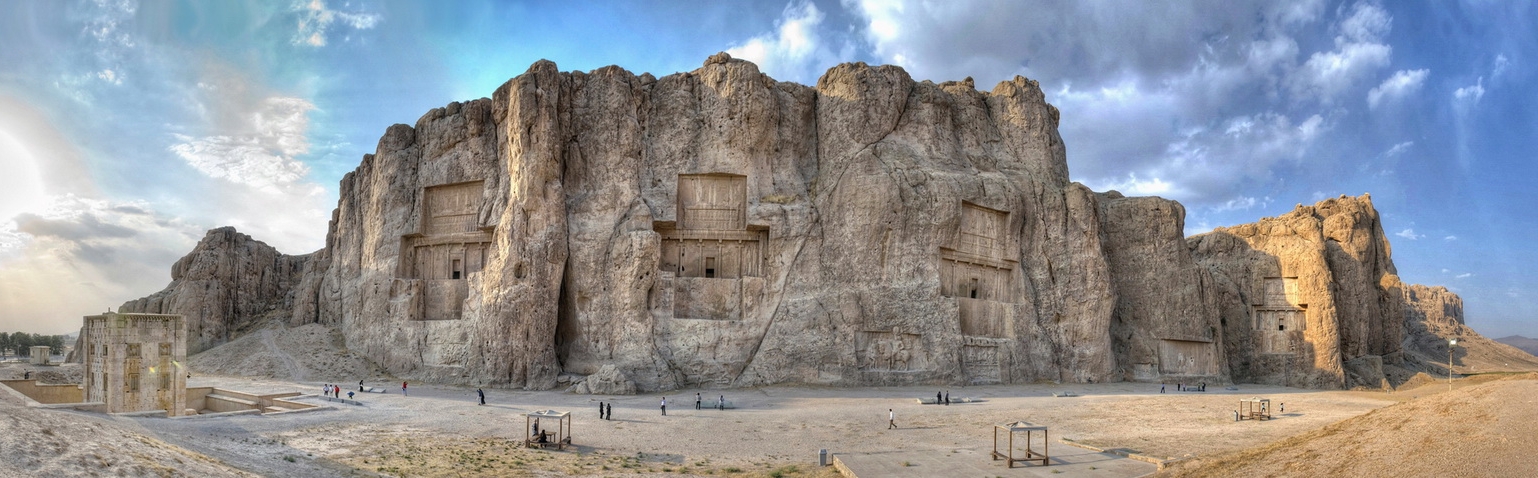
He died during October of 486 BC after ruling for approximately 36 years. He was put to rest in the rock-cut tomb in Naqsh-e Rostam, where he had prepared before his death.
Xerxes, his eldest son by Queen Atossa, was designated as his successor.
Religion
Darius’s inscriptions repeatedly attribute kingship, victories and order to Ahura Mazda. Based on the Greek sources, the later Achaemenid kings were Zoroastrian. As for Darius himself, there is no scholarly consensus on whether he should be described as a Zoroastrian.
Conclusion
Darius consolidated the Achaemenid Empire and reshaped its administration, economy and infrastructure. His achievements during the 36 years of his reign are:
- Introducing daric and siglos system.
- Reforming the taxation system.
- Expanding and organizing the imperial road network, including the Royal Road.
- Introducing the Old Persian cuneiform script and commissioning major royal inscriptions such as Behistun.
- Constructing Darius canal linking the Nile to the Red Sea.
- Founding Persepolis.
- Expanding the empire to its greatest territorial extent.
References
- Encyclopaedia Iranica – Darius I
- Encyclopaedia Iranica – Behistun Inscription
- Encyclopaedia Iranica – Persepolis
- Cambridge University Press – From Cyrus to Alexander:
- Wiley – A Companion to the Achaemenid Persian Empire
- Pierre Briant – From Cyrus to Alexander: A History of the Persian Empire
- Maria Brosius – The Persians: An Introduction
- Matt Waters – Ancient Persia: A Concise History of the Achaemenid Empire
- Amélie Kuhrt – The Persian Empire: A Corpus of Sources from the Achaemenid Period
- Lloyd Llewellyn-Jones – Persians: The Age of the Great Kings