
Introduction
Hafezieh (Tomb of Hafez) is the last resting place of Hafez, one of the most important and influential poets in Iran. It is more than just a mausoleum; it is where literature, music, poetry recitation, Persian culture, and architecture come together.
It’s a peaceful retreat for Iranians bringing their children from a young age to learn about Hafez and poetry.
Hafez: The Life and Legacy of Persia’s Greatest Poet
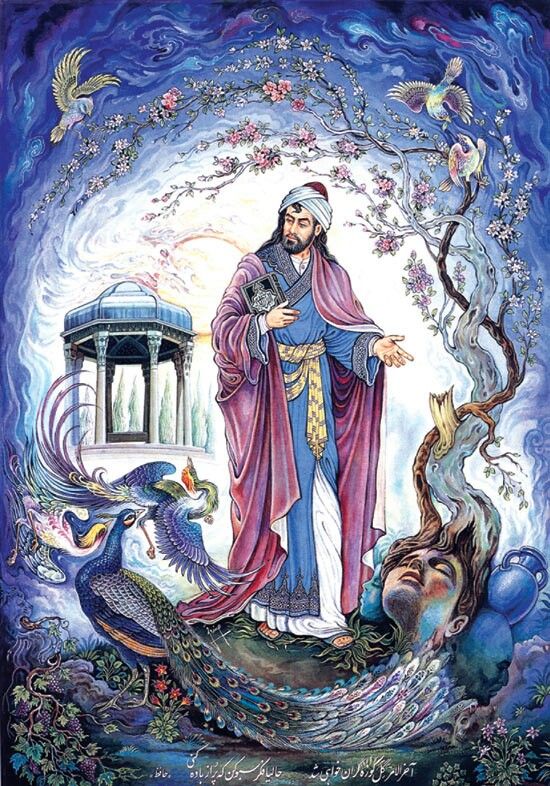
Khwaja Shams al-Din Muhammad Hafez-e Shirazi (c. 1315–1390) is the symbol of Persian poetry. His pen name, Hafez, means “one who has memorized the Qur’an. ” He had memorized the holy book from a young age.
What is left of his work today consists of almost 500 ghazals. These lyric poems’ themes are:
- Beauty and nature
- Earthly and divine love
- Wine, a mystical symbol
- Wisdom and freedom
- Spiritual longing
Hafez’s poetry is layered, and people can interpret it the way they understand it. The same verse read by different people can be interpreted as mystical, romantic, political, or philosophical. This level of richness is what made his Divan one of the most beloved books in Persian literature.
Hafez’s influence
Hafez’s influence extended far beyond Iran and to other countries as well. He managed to become an international influence centuries after his passing.
Hafez’s poetry inspired Johann Wolfgang von Goethe, who wrote West-Eastern Divan. Ralph Waldo Emerson admired Hafez and translated his book.
Besides these two, many Persian poets, calligraphers, scholars, and musicians were influenced by Hafez as well.
After the Qur’an, the Divan of Hafez is the second book you find in Iranian households. During popular ceremonies and events like Nowruz or Yalda Night, you can see Iranians reading and reciting Hafez, following the tradition of Fal-e Hafez, and seeking guidance by randomly opening the Divan of Hafez.
History of Hafezieh
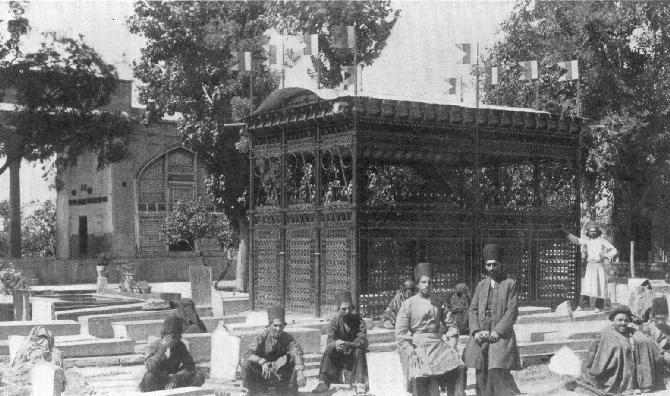
After passing away, he was buried in Mosalla Gardens of Shiraz. Over the centuries, this place evolved into what it is today.
Every prominent ruler of Persia added their own touch to this place. In 1452, the Timurid governor of Fars built the first domed memorial. Later on in 1773, during the Zand dynasty, landscape gardens and a grand hall with stone columns were built there.
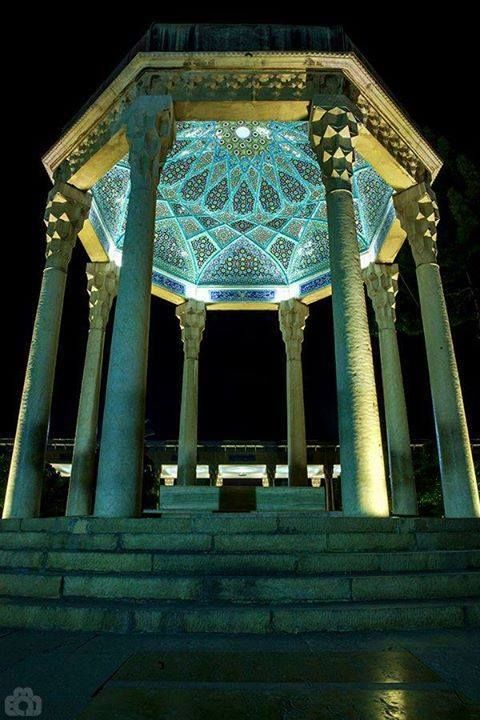
In 1953, the French architect and archaeologist André Godard designed the present mausoleum by blending Persian and modern architectural elements together.
Architecture of Hafezieh
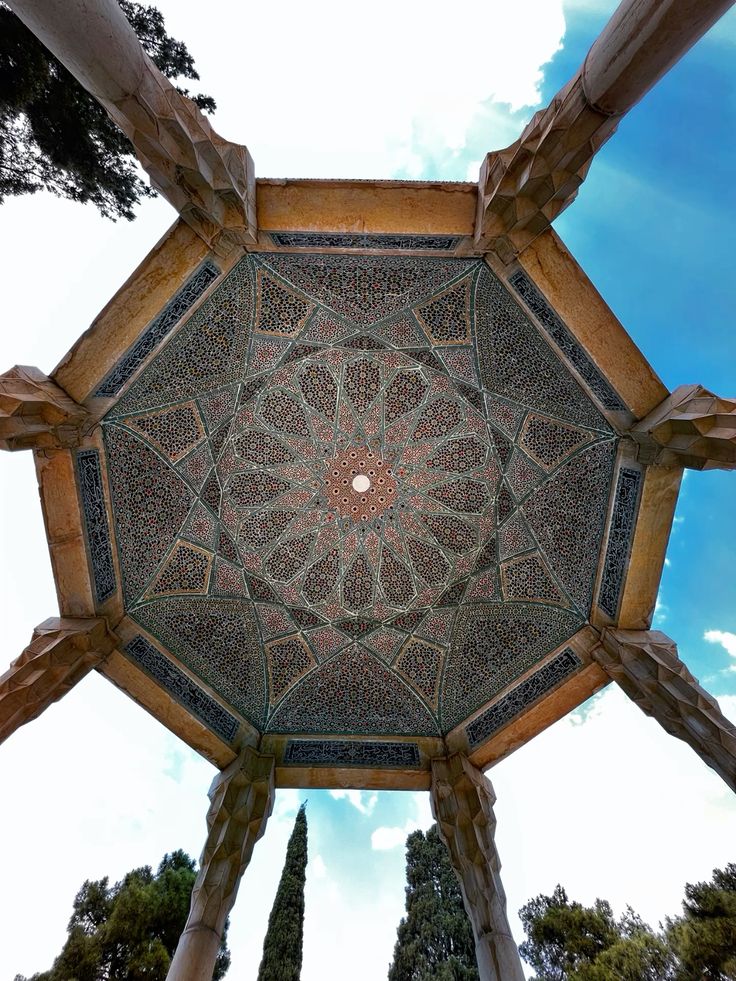
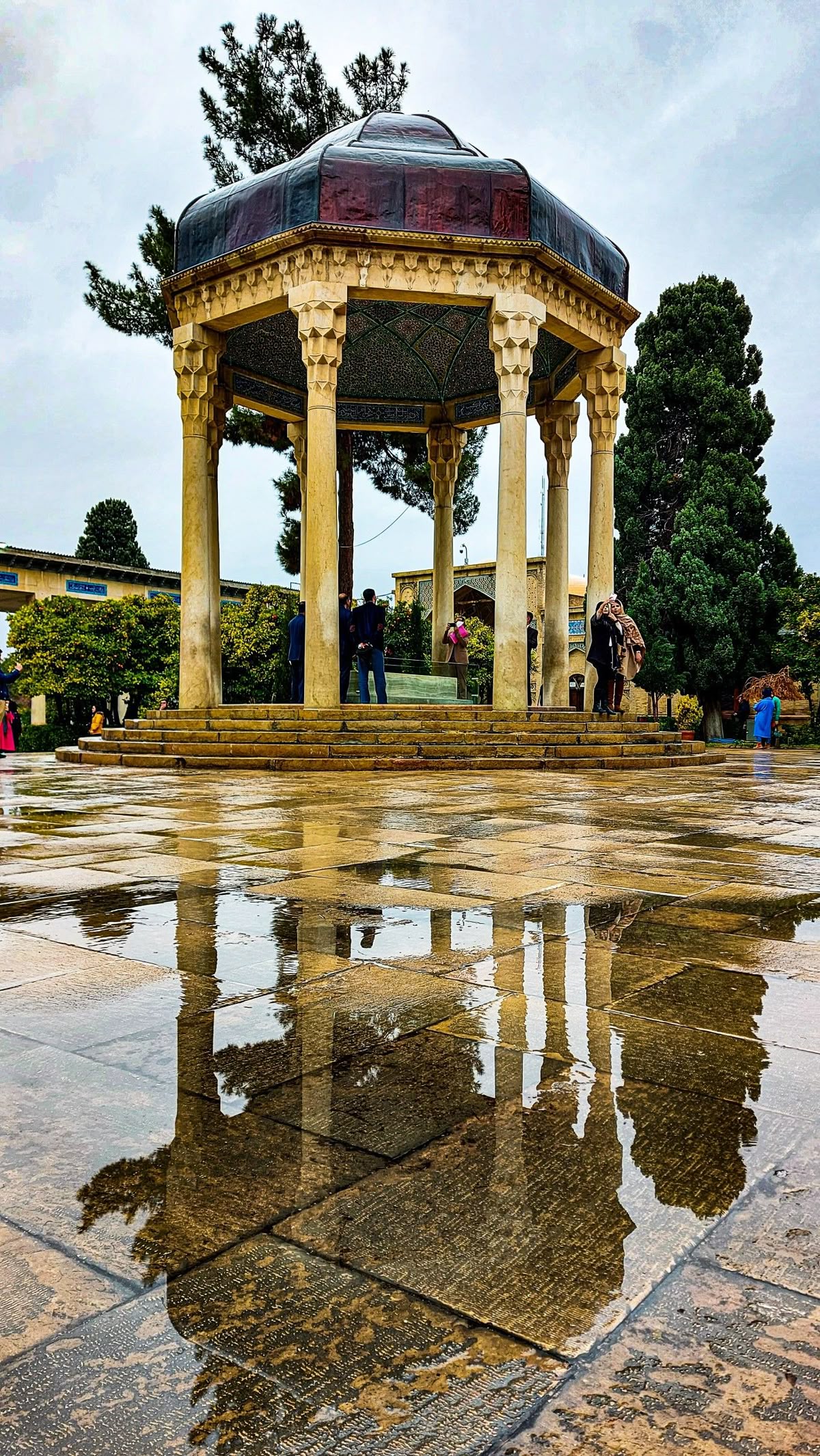
The complex covers 19000 square meters. The tomb of Hafez has an octagonal pavilion supported by 8 slender columns, and the marble tombstone is carved with poems of Hafez. The dome is shaped like a Dervish (Sufi) hat, and the interior is decorated with mosaic tiles.
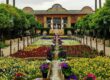
Flower gardens, bitter orange trees, cypress trees, reflecting pools, fountains, and marble walkways are covering this complex.
Visiting Hafezieh
The best time to visit this complex is during the afternoon when the temperature drops. You need 1-2 hours to visit this place properly.
The nearby attractions are Qur’an Gate (Darvazeh-ye Ghoran), the tomb of Saadi, and Jahan Nama Garden.
FAQ
Can you visit Hafezieh without a guide?
Yes, it is possible to visit Hafezieh on your own. Although you could be missing out on a whole lot when it comes to Hafez if you visit it alone.
Is Hafezieh wheelchair accessible?
Yes, it is.
Conclusion
Hafezieh is one of the most important Iranian cultural sites. It reflects the importance of literature and poetry in Persian culture. This is not just a resting place but a symbol of poetry, literature, beauty, wisdom, and culture.